Tal’
February — March
Pollination
The farmer climbs the palm to place the male pollen in the female bunch by hand, as has been done for thousands of years. No machine takes the place of this step, even today.
We do not buy on the open market. This is the land we harvest from, the people who harvest it, and the night when it all happens.
It is no accident that Sukkari comes from Qassim. It comes down to water, soil and the night.
Unaizah sits on the edge of Wadi Al-Rummah, the longest valley in the Arabian Peninsula. Beneath its sand lies a layer of limestone that holds fresh water close to the roots, so the palm drinks without drowning. That balance — water close by and soil that drains — is what makes a plump fruit rather than a watery one.
Then comes the swing in temperature. A Qassim summer day passes forty degrees, and the night drops ten degrees or more. That swing is what builds up the sugar in the fruit slowly instead of ripening it all at once — much as altitude does for a coffee bean.
And finally, time. The oldest palms we harvest from were planted more than eighty years ago. An old palm yields less, but what it yields has a deeper taste — and that is the only reason we keep them.
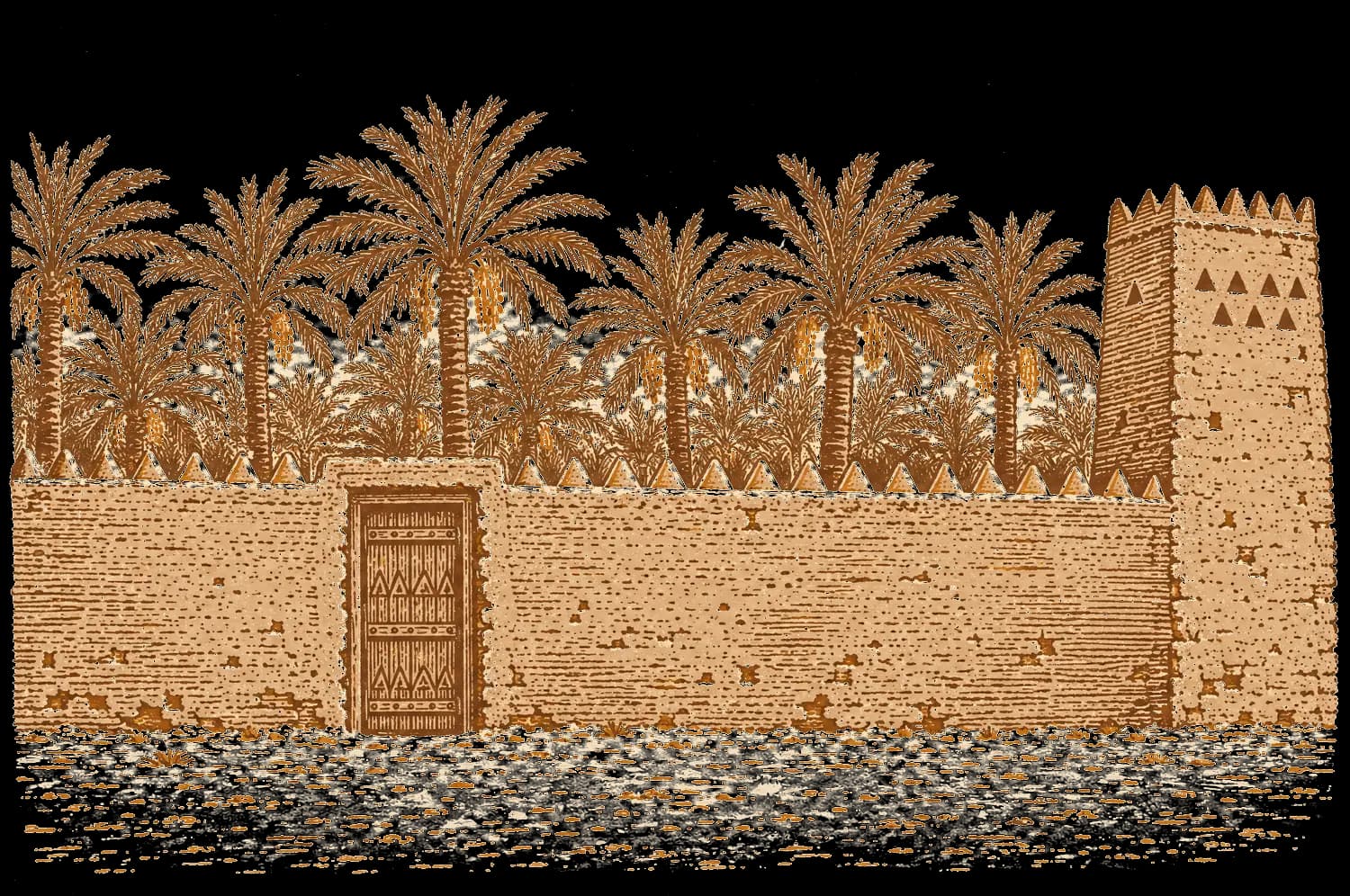
A mud wall, a door and the palms behind it — the old architecture of Qassim.
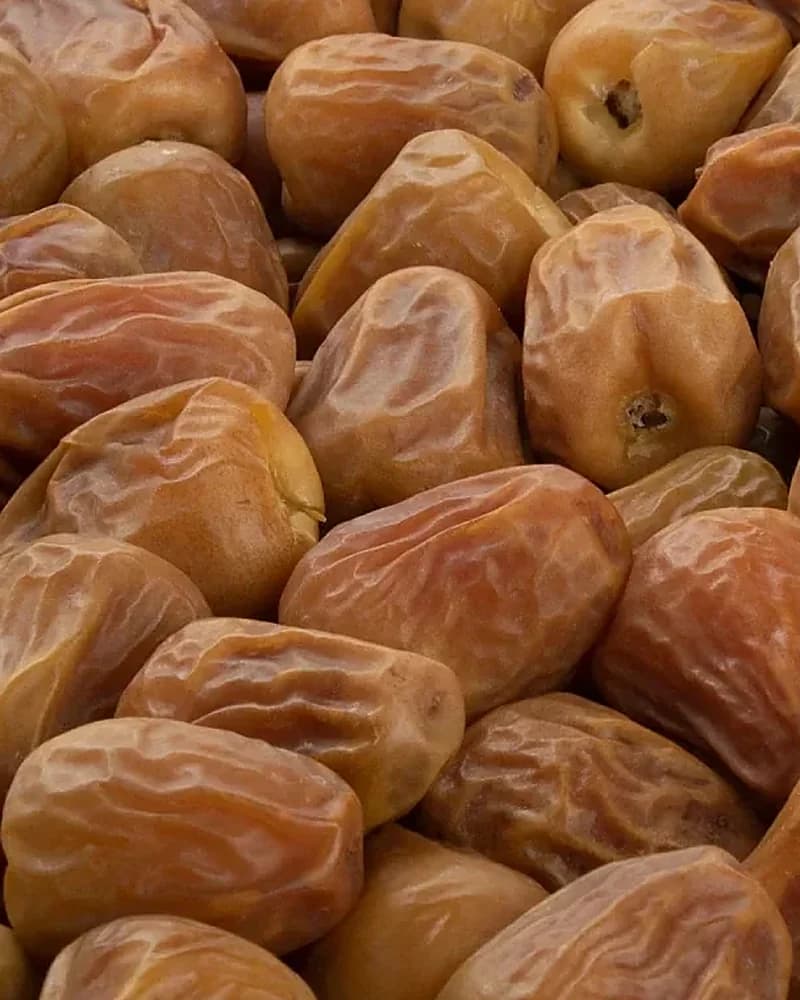
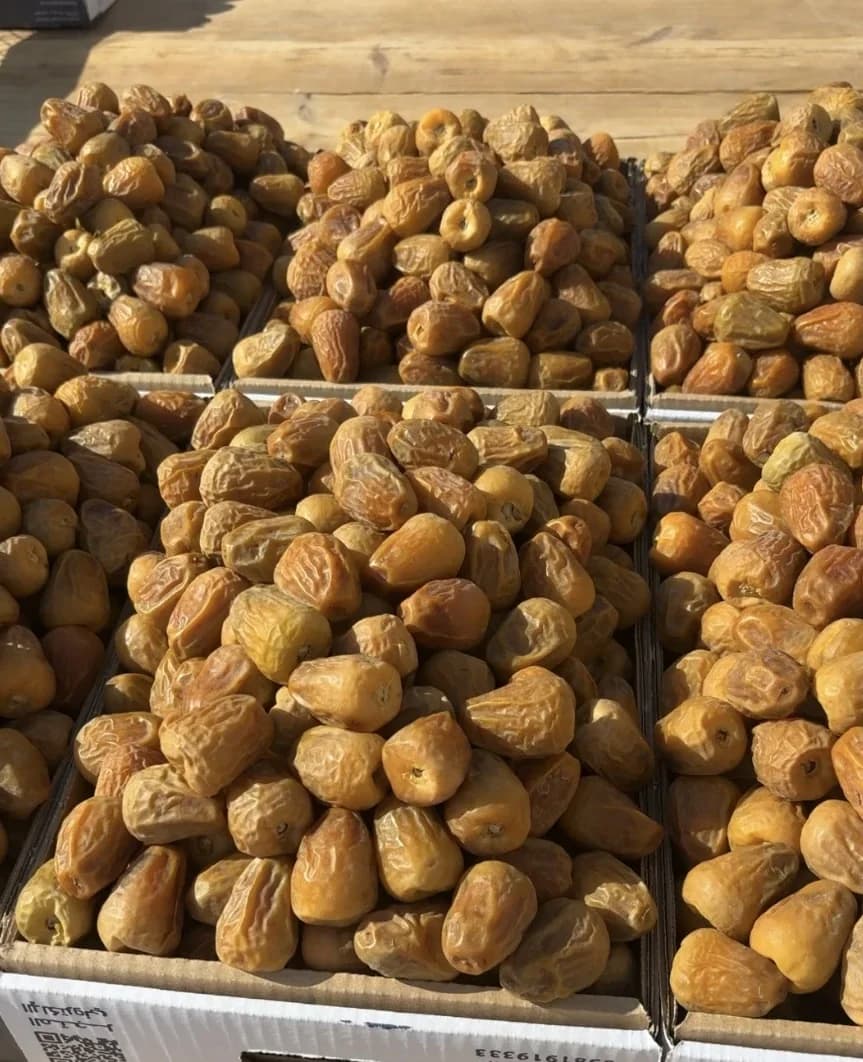
A date passes through four stages in a year. Mufattal falls in the last of them — after the rutab has dried a little, and before it loses its soft flesh.
February — March
Pollination
The farmer climbs the palm to place the male pollen in the female bunch by hand, as has been done for thousands of years. No machine takes the place of this step, even today.
June — July
Yellow and crunchy
The fruit is full size and firm, yellow or red depending on the variety. Its sweetness is light, with a gentle astringency. Barhi is eaten at exactly this stage.
August — September
Peak ripeness
The colour begins to turn from the tip, the flesh softens, and the sugar peaks before the water is lost. This is the shortest and most precious of the stages — and the hardest to ship.
October onwards
Keeping
The fruit loses its water, so its sugar concentrates and it keeps longer. This is where Mufattal and Maknooz appear, and where the date becomes a year’s provision rather than a season’s fruit.
To the people of Qassim, the harvest is not “picking”. It is a season with its own nights, its own people and its own food.
The climbing begins while it is still under twenty degrees. A cool fruit can be handled without being crushed, and its sugar has not yet melted.
What is picked is sorted within the hour, fruit by fruit, not by the kilo. Whatever fails the sorting is set aside at once and goes to the press.
The rutab goes into the cold room at four degrees within two hours of picking. Here time stops working against it.
The box is stamped with its production date and its grade, and leaves in a refrigerated truck the same day.
“The farm's authenticity .. for quality that lasts”
Browse the grades